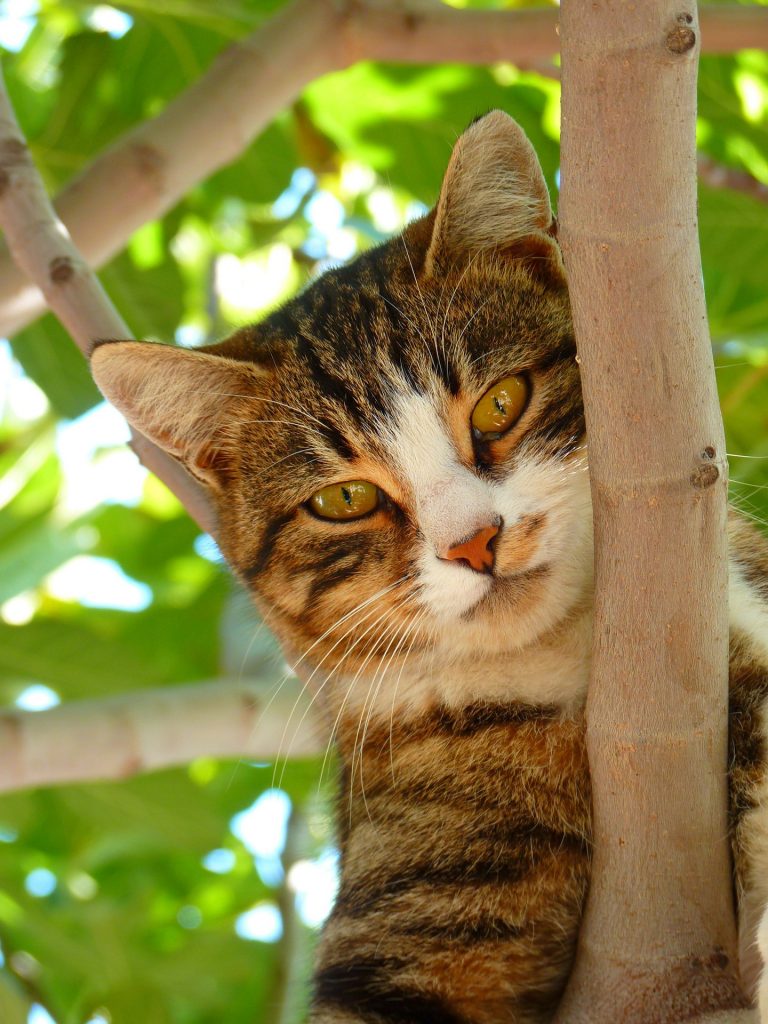
Cats and laptops have an inexplicable — yet inexorable — attraction. You open your laptop, look away for thirty seconds, and return to find your cat seated squarely on the keyboard with an expression of complete satisfaction. Cat sitting on laptop behavior is so universal that it has inspired merchandise, memes, and entire social media threads. But behind the comedy is genuine behavioral science. There are at least four distinct feline drives that make your open laptop irresistible, and understanding them gives you the tools to redirect the behavior effectively.
1. Your Laptop Is the Warmest Surface in the Room
The thermal explanation is the simplest and most universal: running laptops generate significant heat. Laptop surface temperatures during normal use range from 40–50°C (104–122°F) — high enough to qualify as what behavioral scientists call a “thermally preferred surface” for cats. Cats have a preferred body temperature of 38.5–39.2°C and a preferred ambient temperature significantly higher than what humans typically keep homes at. From your cat’s perspective, your open laptop offers exactly the kind of sustained, localized heat source they seek instinctively. This is the same drive that explains why cats sleep in sunbeams, drape over radiators, settle on freshly dried laundry, and — of course — sleep on their owner’s head at night.
The most effective way to address the thermal motivation is to provide a dedicated heat source as an alternative. A heated cat bed placed on or immediately beside your desk competes directly with the laptop on the one dimension cats care most about — warmth — while being softer and more comfortable as a sleeping surface.
2. Your Laptop Smells Intensely Like You
Cats navigate and evaluate the world primarily through scent. Your personal scent signature — accumulated through hours of daily hand contact — saturates your laptop more intensely than almost any other object you own. To your cat’s highly sensitive nose, your laptop is one of the most powerfully “you-scented” surfaces in the home. Sitting on the laptop means being immersed in your scent while simultaneously depositing their own through facial and paw glands — a behavior called allorubbing or bunting that marks objects and individuals as belonging to the cat’s social group. Your cat is, in essence, claiming your laptop as theirs — and by extension, claiming you. This same scent-seeking dynamic explains why cats follow their owners from room to room throughout the day.
3. Your Laptop Has Your Attention — and Cats Know How to Compete With It
Cats are remarkably perceptive about the direction of human attention. When you stare at a screen, you are visually unavailable — your eyes are engaged elsewhere, and you aren’t responding to your cat’s normal proximity or vocalization signals. Sitting on the laptop is a highly effective strategy for breaking this pattern: it physically interposes itself between you and the screen, forces visual contact, and produces an immediate reaction (usually a removal, which involves handling the cat — from the cat’s perspective, this is physical interaction, which counts as attention). In other words: the strategy works, which is why cats repeat it.
This is attention-seeking behavior in the clearest sense. Understanding it within the broader framework of cat body language and communication helps distinguish cats who genuinely need more engagement from cats who are simply opportunistic.
4. Cats Are Drawn to Flat, Defined, Bounded Surfaces
Behavioral research on cats has documented a phenomenon sometimes called “if it fits, I sits” — the strong feline attraction to any flat, defined, bounded surface. Whether it’s a cardboard box, an open suitcase, a newspaper, or a laptop keyboard, cats are drawn to these clearly defined flat territories because they provide a sense of enclosure and visual boundary without the confinement of a covered space. The laptop combines this territorial appeal with warmth and your scent in a triple-threat combination that is genuinely difficult for most cats to resist. Providing an alternative that shares these qualities — a wall-mounted cat shelf or window perch near your workspace gives your cat a defined, elevated territory to occupy that satisfies all three drives independently.
Practical Solutions That Actually Work
The most effective approach is always substitution rather than prohibition. Cats respond very poorly to being told “no” without being offered an acceptable “yes.” Concrete strategies:
Place a comfortable cat bed or heated pad on the desk itself — right beside the laptop — so the warm, scent-adjacent alternative is immediately available. Most cats will choose a warmer or softer surface when it’s presented as a genuine option. Add a piece of your worn clothing to the alternative bed; your scent reduces the primary advantage the laptop has.
Put a cardboard box on or near your desk. The box satisfies the bounded-territory drive directly and is low-cost and replaceable. Many cat owners report that a simple box eliminates laptop-sitting entirely.
Schedule a play session immediately before your work period. A cat whose predatory drive has been satisfied is far less likely to seek out attention-seeking strategies during your focused work time. Ten minutes with a wand toy before you open your laptop can buy you two hours of undisturbed work.
For additional behavioral context, PetMD’s coverage of feline attention behaviors at petmd.com provides useful supplementary reading.
💡 Pro Tip: Place a piece of your worn clothing on the alternative surface. Your scent on the bed eliminates the main advantage your laptop holds — combining warmth and your presence in one location — and makes the alternative genuinely competitive.
Frequently Asked Questions (FAQ)
Q: Why does my cat walk on my keyboard?
A: Walking on the keyboard achieves the same goals as sitting on it: warmth, your scent, and your immediate attention (the screen suddenly fills with gibberish). It also triggers the satisfying sensory feedback of keys pressing underfoot. Providing an adjacent alternative and scheduling pre-work play sessions is the most effective solution.
Q: Is sitting on my laptop harmful to the cat?
A: Not typically. The heat generated by laptops is well within a cat’s comfortable temperature range. The main risks are to the laptop (hair getting into vents, key damage) rather than the cat. If the laptop runs very hot under load, some cats may eventually find it uncomfortable and leave voluntarily.
Q: Why does my cat specifically choose my laptop over my partner’s?
A: Your personal scent is the key differentiator. Your laptop carries your specific scent signature most strongly, and your cat has bonded to you as their primary attachment figure. They’re drawn to the object that smells most like the person who is most important to them.
Q: My cat sleeps on my closed laptop. Why?
A: A closed laptop still retains residual warmth and your scent — both are persistent enough to attract cats even after the device is shut down. This is a gentler, less disruptive version of the same behavior and typically not worth redirecting unless it becomes a problem.